
Why eat Fermented Foods?
Weather it’s pickled vegetables, yoghurts or cheeses, fermentation is not only
about making delicious foods. Incorporating fermented foods into your diet can
help the body absorb the nutrients you are eating and discard the toxins that the
body does not need.
Eating nutrient dense food is only part of the equation to superior health. Being able to absorb those nutrients at the gut level is the other part of the equation.
Fermented food provides beneficial bacteria that aid in digestion and extraction of nutrients and it enhances the availability of vitamin A and C. These foods help speed up detoxification by allowing microorganisms to chelate (bind to) toxins and excrete them from the body. Fermented foods also improve immune function, acne and have even been shown to help ward off cancers.
Now that you are convinced of it’s health merits, why not make your own? Fermentation at home is easier than you think. It’s not a new age idea that requires any fancy equipment.
Many cultures have been making these foods for years as away of maintaining robust health. Think of the Germans with their sauerkraut or the Koreans with their Kimchi.
Kim Chi is a spicy pickled cabbage that is legendary for its health benefits. The koreans like it nice and hot packed with heaps of chilli, but you can tone yours down or omit the chilli all together. I take a moderate approach to my recipe. It’s warm but not spicy that kids can’t eat it.
This Recipe below makes 4 densely packed jars that will keep for a month in the refrigerator.
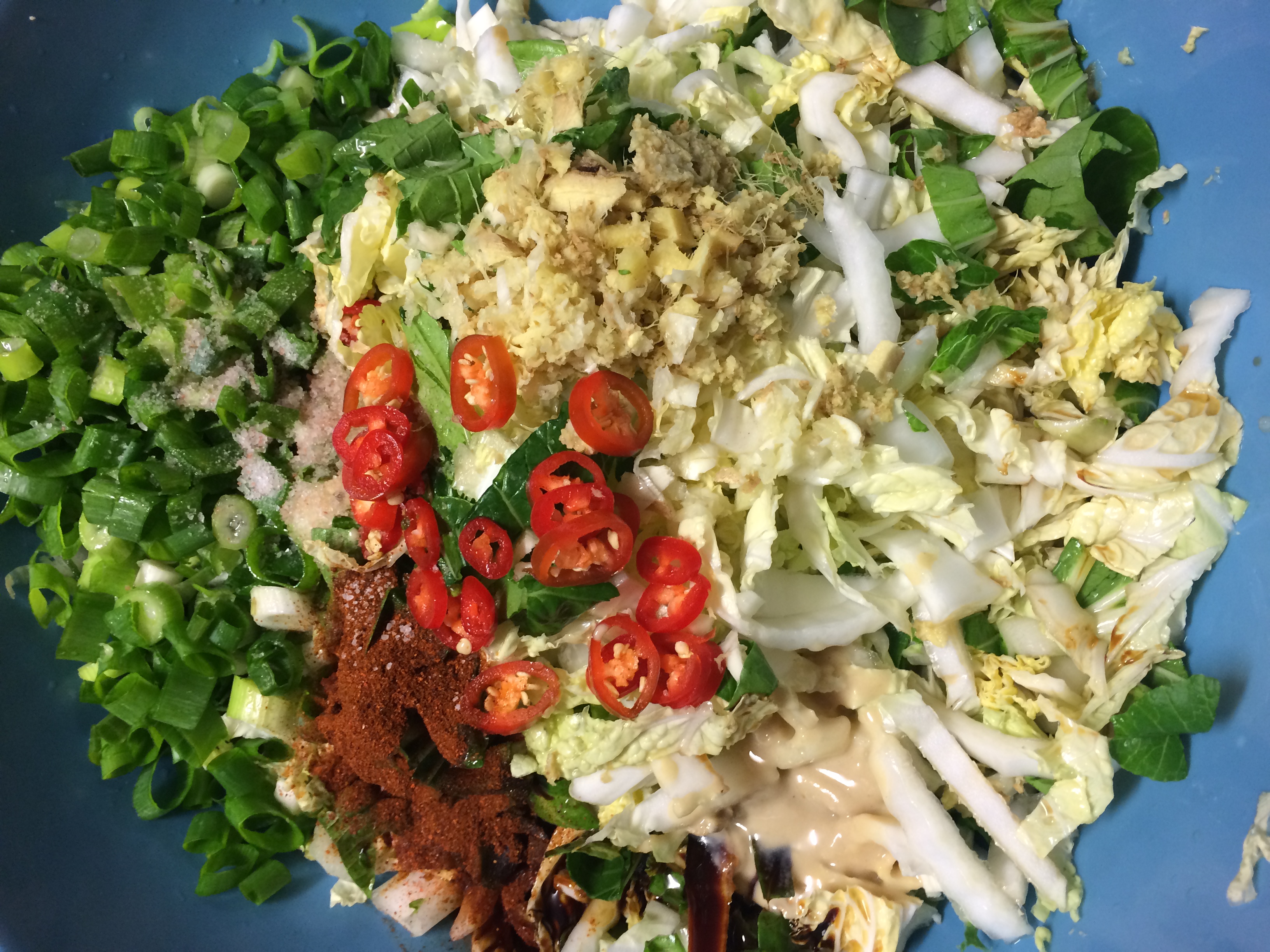
Ingredients
½ a wombok cabbage (or any cabbage will do)
2 bunches of bok choy
3 large cloves garlic crushed
1 knob (1 tbs) grated ginger
2 stalks of spring onion (green and white part of the stalk)
1 tsp pink or Celtic salt
¼ cup Braggs Amino Acids or tamari
½ cup apple cider vinegar
2 chilies
2 tbs honey or palm sugar (needed for fermentation)
2 tsp tahini or mustard
2 tsp cayenne pepper
Method
Chop all salad ingredients finely and place in a large glass bowl or jar. Avoid metal or plastic as it affects the fermentation process. Add remaining
ingredients and toss well to combine. Cover with a lid or plastic wrap. Allow to sit in a warm dark spot for 3 to 5 days. You will notice that the vegetables quickly drop water. This will add to the pickling brine. if there is not enough brine (salty water) to cover thevegetables then just top up with a little water.
If your home is warm or it is summer, the fermentation will be enough after 3 days. Taste it and decide. If you need more tang then cover and leave for a few more days. Spoon into clean jars if you have used a bowl, and pour on enough liquid to ensure there are no air pockets. Once refrigerated the fermentation will greatly slow and this will last for several weeks or longer.
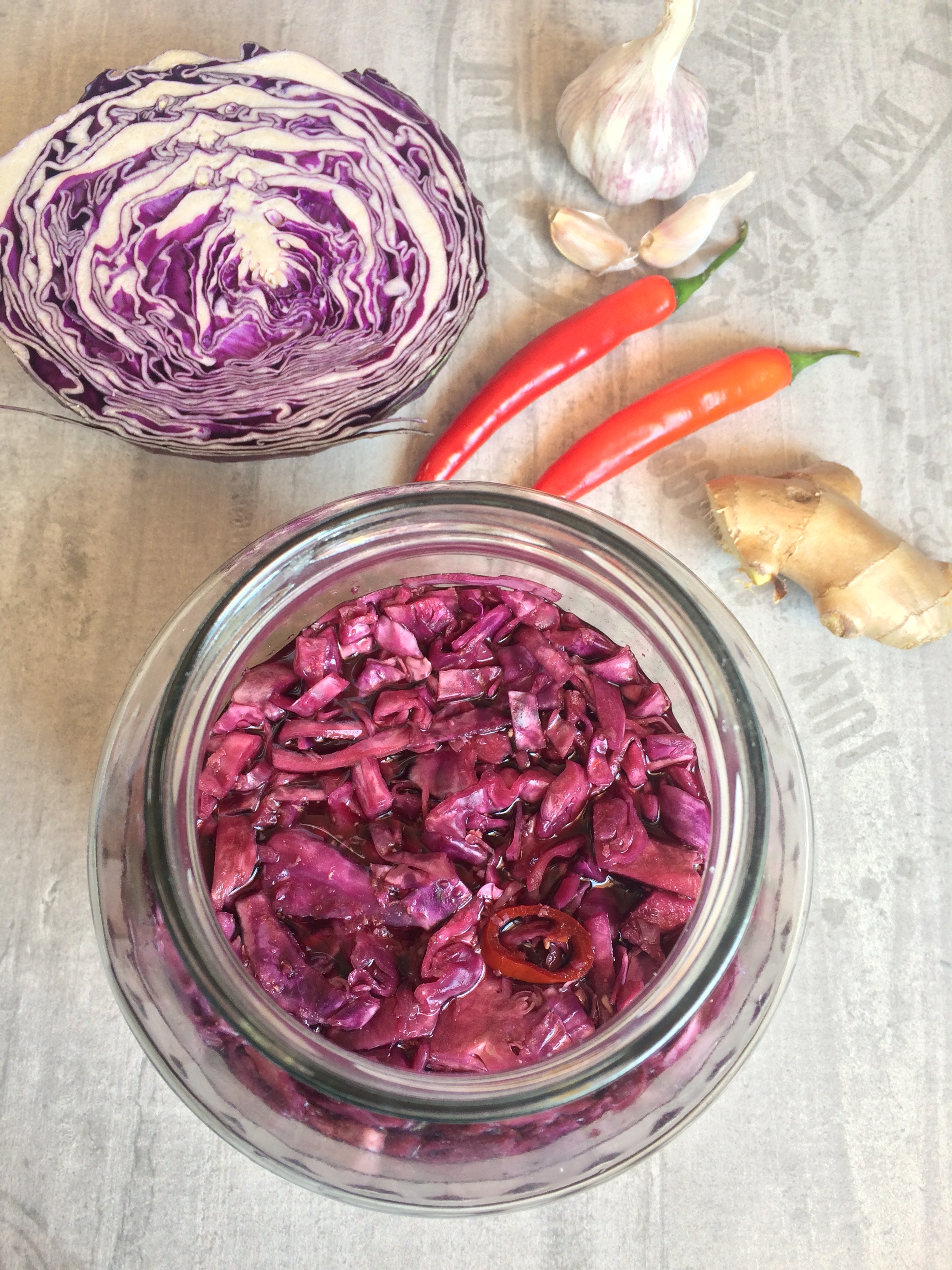
Try pickling other vegetables. You might want to try a purple cabbage. I love the vibrancy of this purple hue and it looks great when contrasted against a fresh green kale salad. Keep the principles of adding salt, ginger and garlic as well as vinegar or water. You may want to leave out the tamari.
Note: Watch out for mould. Bacteria is what we are cultivating. If you see mould then you need to throw it out and start again. I’ve never found mould spores in mine because I do shorter ferments and I keep the Kim Chi or sauerkraut covered in brine.